


I saw another one of those articles come along about psilocybin being “the next big breakthrough”. Billions, FDA, investors, patents. You could almost make a sport of it: who's in the front row fastest?
In the US, the conversation is rapidly shifting from magic mushrooms and magic truffles as natural products to one “active ingredient” that you can separate from the whole. And once you have done that, the route is ready: a separate pill for each application, a separate package for each target group, a separate price tag for each route.
That is exactly what they want to do. Reduce a living natural product to an ingredient, and then build an industry around it that should pay for itself.
And that chafes, because magic mushrooms and magic truffles are not an invention. They are natural products. They just grow. In soil that is alive. For as long as there have been fungi, and for as long as there have been animals and people tasting, eating, searching. Sometimes out of hunger. Sometimes out of curiosity. Sometimes because someone is in a period where the old no longer works.
There are cultures where the use of psychoactive mushrooms and related organisms is intertwined with tradition and meaning. Rather like something you walk around with respect. You also notice it in the way it is talked about: less technical, more human. Less possession, more relationship.
And that is exactly why what is happening now is interesting.

From natural product to industry
As soon as something visibly “works” in the eyes of the modern world, two forces appear.
The first is research. And that is good. Safety, knowledge, diligence, clear frameworks, it's all part of the job. Nobody gets better from wild stories or messy quality.
The second force is money. Rather because a system wants to build, with possession and scale as the end point.
Then you see the familiar pattern. You take a natural product, you take it apart, you pick one substance that you can isolate, measure, standardise and patent. And then you build an infrastructure around it that has to pay for itself. Clinics, licences, protocols, real estate, insurance, an army of consultants.
The end point is often a pill. The sellable idea is “control”. The side effect is usually “price”.
And underneath that is a question you can't brush away with pretty words.
Who will soon be able to pay for it?
The US: top-down dream, bottom-up practice
In the United States, you can already see this tension. The upper tier is the official route: clinical trials, FDA, investor decks, big promises and even bigger budgets. Everything tight, everything neat, everything towards “soon”.
But among that upper layer, something else lives. People are living now. They have stress now, questions now, a need for direction now. Many people cannot or do not want to enter a route that revolves around long counselling hours and costs that are out of reach. And so a parallel route always emerges. Sometimes chaotic. Sometimes surprisingly professional. But above all: present.
That parallel field raises uncomfortable questions. Is there going to come a time when enforcement gets tougher once it becomes more visible? Will wealthy parties lobby to curb consumer access and protect their market share? And what if clinical psilocybin gets approval soon, but the price remains so high that it becomes mostly an elite product?
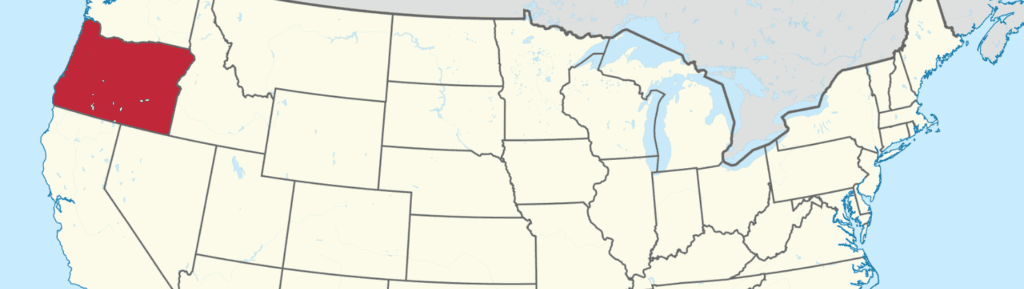
Oregon has already shown how quickly “regulated” can also become “expensive”. And once it becomes expensive, the practice naturally seeks other ways. Rather because life doesn't wait for a system to be ready.
Netherlands: suddenly very practical

Hans Grootewal and Paul Stamets in conversation
In a culture cell of Magic Truffles at Fresh Mushrooms.
The Netherlands has a different starting point. Here, magic truffles are legal, as long as they remain unprocessed. That means: no active processing, no extracts, no pills, no preparations that alter the product. What matters is the truffle as a natural product, fresh and as it is.
That one premise changes the conversation. Rather because you don't have to pretend that access is only a future plan. Truffles have been ordered by consumers here for years. Openly, through online shops and specialised outlets. It is part of the landscape.
And because the basis is legal, you also see something in the Netherlands that is more difficult in many countries: truffles have found their place in supervised settings within professional frameworks, including those of registered psychotherapists. Rather as part of counselling where preparation and integration are taken seriously.
Fresh Mushrooms Ltd and Microdosing XP do not do retreats or sessions with clients themselves. That remains important to keep pure. We grow and supply a natural product. Guidance is the work of specialised professionals and centres who have their own responsibility in this.
Magic mushrooms vs magic truffles
Because there's a lot of confusion about it, just as clear.
Magic mushrooms and magic truffles come from the same fungal family: Psilocybe. It is one organism that can show itself in two ways.
The mushroom, mushroom, is the fruiting body that appears above ground. It grows relatively quickly and responds strongly to conditions such as light, temperature, humidity and nutrition.
The truffle grows underground. It is the sclerotium: a compact nutrient reserve that the fungus can create to survive. Another part of the same organism. More compact in structure and, in practice, less dependent on above-ground fluctuations.
In the Netherlands, magic mushrooms, shrooms, have been banned since 1 December 2008. Truffles have remained legal as long as they remain unprocessed. This makes truffles the logical, legal route here.

It involves more than one substance
In conversations, everything is often reduced to one word: psilocybin.
But magic mushrooms and magic truffles are natural products. They contain several substances, including psilocybin and psilocin, as well as related compounds. Many people describe that the effect does not feel like one button you turn on, but a profile. An interplay. This is often called the entourage effect.
You don't need to make a miracle story out of that. It is a down-to-earth observation: nature is a whole. Not a single molecule.
And when you microdose, that profile becomes extra important. You work with small quantities. Then you don't want outliers. Then you want something that fits quietly into your week.

Stability and microdosing
Added to this is a practical point that weighs heavily in real life.
Truffles tend to have a more consistent profile than above-ground mushrooms. Mushrooms can turn out more variable because they react more strongly to conditions above ground. In microdosing, where you work with small doses, this variation can become noticeable more quickly.
That predictability is a major reason why truffles fit so well with microdosing and why professionals value them in supervised settings. Rather because you want as little noise and as much consistency as possible.
Fresh, unprocessed, and therefore serious
In the Netherlands, “legal” with truffles also means something very concrete: you leave the product alone. No extracts, no pills, no active processing. You stick to the truffle as it comes out of cultivation.
That requires something from the chain. If you take the natural product seriously, the quality has to be right. Then it's about cultivation, selection, batch thinking, hygiene, packaging, and clear information. Then it's less about screaming marketing and more about trust.
Fresh Mushrooms Ltd and Microdosing XP
The legal position of truffles in the Netherlands has allowed Fresh Mushrooms Ltd to build up years of experience in growing high-quality psychoactive truffles. That craftsmanship is not in fancy words. It is in repetition. In discipline. In respecting the pace of an organism.
Microdosing XP builds on this by choosing magic truffles as a natural product, and focusing on reliable outlets.
The point is not that “the Netherlands is doing better”. The point is that the Netherlands already has a foundation on which to build maturity. Once access exists, responsibility automatically comes into the picture. Then you can't suffice with hype. Then you have to do it properly.

Where this is going
The future of psychedelics is not just about medical approval. It is also about accessibility, price, quality, and who gets to participate.
If everything goes only through clinical exclusivity, it becomes expensive and scarce. Then a parallel route naturally emerges.
If everything runs only through consumer access without quality standards, it gets messy.
The mature route is in recognising both worlds, and in taking natural products seriously without turning them into a circus.
With legal, unprocessed truffles, the Netherlands has a rare foundation. With that comes an adult conversation. Rather about quality. About stability. About responsibility. About the difference between a live truffle and a pill that mainly feeds an industry.
Read more about Microdosing XP: https://microdosingxp.com/nl/microdosing-xp/
Check out the outlets: https://microdosingxp.com/nl/verkooppunten/
