


A society adrift
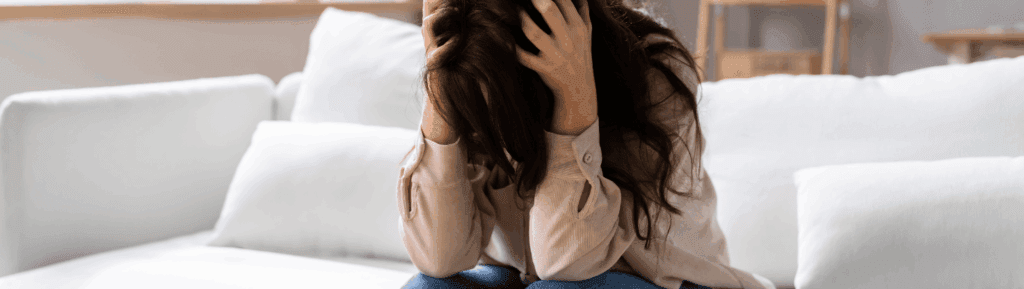
In the Netherlands, more than 100,000 people are currently waiting for mental health care. Some of them have been on a waiting list for months for an intake. Others have been registered, but are still waiting for a practitioner. And then there is a third group: people who are not on any waiting list because they have lost faith in recovery, or because they have been told that their problem is ’too complex’ for regular care. These are the forgotten patients. Who cling to pills that do not help. To conversations that change nothing. To diagnoses that offer no direction. To hope that has become wafer-thin.
At the same time, the financial foundations of healthcare are cracking under the weight of mental health issues. Every year, we spend more than 28 billion euros on mental health disorders in the Netherlands, accounting for almost a third of total healthcare costs. And this figure is increasing every year. According to the latest forecasts, healthcare expenditure will rise by another 14 billion euros between 2025 and 2030.
The pressure is palpable. Not only among healthcare providers and patients, but also among policymakers, scientists and the general public. Everyone knows that things have to change. That change is possible. And increasingly, a word that was long taboo is being used: psychedelics.
The revaluation of consciousness
The idea that a mind-altering substance could contribute to healing still feels strange to many. Stories about LSD, magic mushrooms and ayahuasca live on in images full of hippies, psychoses and dangerous excesses. But if you look beyond the stigma, you will discover a different story.
A story of ancient cultures that have practised rituals involving psilocybin-containing mushrooms for thousands of years. A story of serious scientists who have been researching the therapeutic value of psychedelics since the 1950s. And a story of people who have managed to transform deep trauma, chronic depression or existential anxiety, not despite, but precisely because of a guided psychedelic experience.
Nowadays, we increasingly talk about psychedelic-assisted therapy: a combination of psychedelic substances (such as psilocybin or MDMA) with professional guidance in a therapeutic setting. According to a growing number of researchers, it is this combination that leads to remarkably positive results in conditions such as PTSD, treatment-resistant depression, addiction and existential anxiety in the case of terminal illness.
Science, legislation and healthcare: three tracks, one direction
What began with a few small studies has now grown into a global movement in psychiatry. The EMA (European Medicines Agency) calls psilocybin and MDMA “promising” for conditions with significant medical need, such as treatment-resistant depression. The FDA in the US even granted psilocybin ‘Breakthrough Therapy’ status, which means that it can be researched and developed at an accelerated pace.
Things are also changing in the Netherlands. A growing group of psychiatrists, psychologists, neuroscientists and therapists are calling for the establishment of a national centre for psychedelic therapy. They want to combine research, training and quality control so that this powerful treatment is not left to the market.
Furthermore, the legislation leaves room for manoeuvre. Article 5 of the Opium Act provides for exemptions for scientific or medical use, subject to approval by the Minister. This means that the Netherlands, like Australia and some American states, has the option of allowing psilocybin into mental health care under strict conditions.
Why psilocybin?

But why psilocybin specifically? What makes this substance, which is found in magic truffles in the Netherlands, so special?
Psilocybin is a naturally occurring compound that is converted into psilocin in the body. This substance binds to the 5-HT2A receptors in the brain, which also play a role in mood, cognition and perception. During an experience with psilocybin, fixed patterns of thinking are temporarily released. Instead of repetition, openness arises. Instead of control, trust. Instead of analysis, experience.
This has proven to be incredibly valuable therapeutically. Under the guidance of an experienced therapist, people can experience breakthroughs in a short period of time that would otherwise require years of therapy. The experiences are intense, but often deeply healing. People describe it as “one of the most meaningful events of their lives” – comparable to the birth of a child or the loss of a loved one.
In a comparative risk analysis, the RIVM concluded that psilocybin has an extremely low addiction and toxicity profile, much lower than alcohol or nicotine.
Truffles: the Dutch exception

The Netherlands has a unique position worldwide. While magic mushrooms (mushrooms containing psilocybin) have been banned since 2008, magic truffles remain legal. Truffles are not magic mushrooms, but the underground part (sclerotia) of the same fungus. They contain psilocybin, but are classified differently in legal terms. As a result, the Netherlands is one of the few countries in the world where truffles are freely available, albeit with restrictions, and only to adults.
This exceptional position calls for responsibility. Not only from users, but also from producers and supervisors. That is why artisan growers such as Fresh Mushrooms Ltd opt for maximum transparency and care in their cultivation. It is all about balance: between freedom and safety, between nature and science, between experience and supervision.
Microdosing: a new relationship with yourself
In addition to guided sessions with high doses of psilocybin, there is also growing interest in microdosing: regularly taking a very low dose of truffles, so low that no hallucinogenic effects occur. The goal is not to trip, but to feel more subtly. To think more clearly. To become more emotionally stable. More creative, more aware, lighter.
Microdosing is not a quick fix. It requires coordination, intention and self-reflection. But for many people who do not benefit from antidepressants, or who want to stop taking medication, microdosing offers a natural supplement. Especially in combination with coaching, therapy or bodywork, it can be a powerful catalyst for change.
On https://microdosingxp.com/nl/microdosing-xp/ you will find reliable information, tips and points of sale where you can obtain truffles of controlled quality.

The ethics of rediscovery
As a society, we are rediscovering an ancient wisdom. Psychedelics are not a miracle cure. But when used with care and knowledge, they offer a key to recovery. Not by suppressing symptoms, but by addressing the root causes of psychological suffering: trauma, separation, ingrained beliefs.
It is not an easy path. A psilocybin experience confronts you with yourself. It requires courage, guidance and integration. But that is precisely where its power lies: people learn to experience themselves anew, beyond the filter of fear or depression. They discover a different consciousness, one that is connected to the greater whole.
And that is what this era needs. Not a new pill, but a new vision of mental health. Not treating symptoms, but growing awareness. Not fragmented care, but an integrated approach in which science, nature and humanity reinforce each other.
The future requires choices
The momentum is there. Science, practice and politics are moving towards psychedelic therapy. Yet the road to integration into the healthcare system is still long. It requires vision. Direction. And above all: care.
The call for a National Coordinator for Psychedelic Therapy is not a luxury, but a necessity. Only in this way can we find the balance between accessibility and safety, between innovation and the protection of vulnerable people. Only in this way can we prevent psychedelics from becoming a commercial toy or spiritual ego instrument.
Truffles deserve their place: not on the sidelines, but at the heart of a new health vision. Not as a hype, but as a tool. Not as a replacement, but as a supplement.
Read more about Microdosing XP: https://microdosingxp.com/nl/microdosing-xp/ or take a look at our points of sale: https://microdosingxp.com/nl/verkooppunten/
Sources used
– https://www.vzinfo.nl/kosten-van-ziekten/samenvatting
– https://www.umcg.nl/s/manifest-psychedelische-therapie-kwetsbare-patienten
– https://wetten.overheid.nl/BWBR0001941/2025-07-01/#Artikel5
– https://www.umcg.nl/documents/68138/4408359/manifest-psychedelica-ggz-al.pdf
– https://www.vzinfo.nl/wachttijden/geestelijke-gezondheidszorg
– https://wetten.overheid.nl/jci1.3:c:BWBV0003922&z=2024-12-03&g=2024-12-03