


A subject that recurs
Some topics temporarily disappear from the public conversation and return later when new insights emerge. Psychedelics belong to that category. The topic has been moving between science, culture and law for decades.
Researchers are re-examining how these substances work. Doctors and psychologists follow developments from their own fields. Legal experts look at how regulations around psychedelics came about.
These different perspectives bring the subject back into focus. This gives the conversation a broader context in which science, history and society come together.
A legal review

Within Dutch legal scholar Sjors Ligthart describes this development in the article ‘Psychedelics ’In Dutch drug policy. Towards a thorough rethinking'. In this publication, he examines how psychedelics have been placed within Dutch drug policy and what questions this raises today.
The analysis shows that many elements of current policy have their origins in a period when social conditions and scientific knowledge were different from today. Dutch drug policy took its shape at a time when research on psychedelics hardly took place. Since the 1990s, the basic structure of these regulations changed relatively little. At the same time, scientific studies and international discussions continued to develop.
This observation opens up space for a broader reflection on the relationship between science, society and law.
Psilocybin and the world of fungi

Within the broader conversation about psychedelics, one compound appears regularly in scientific literature: psilocybin. This substance occurs naturally in certain fungi and plays a role in the way the brain processes information.
After absorption in the body, psilocybin is converted to psilocin. This compound affects serotonin receptors in the brain and temporarily changes the way perception, emotions and thoughts are experienced.
The fungi that contain psilocybin develop in different ways. Above ground, fruiting bodies appear, often called magic mushrooms. Below ground, compact structures known as truffles, also called sclerotia, develop.
Both forms are part of the same organism growing from a network of mycelium.
Magic truffles in the Netherlands
Within Dutch legislation, a special situation arose in 2008. In that year, it was decided to place psilocybin-containing magic mushrooms under the Opium Act. Magic truffles remained outside this change in the law.
This created a legal distinction between two forms of the same fungus. Magic truffles are grown and sold in the Netherlands through specialised shops.
For international observers, this situation represents a striking detail within Dutch drug policy. It shows how regulations develop within a specific historical context in which social events and political choices play a role.
The history of this legislation shows how science, policy and public debate influence each other.
The entourage effect
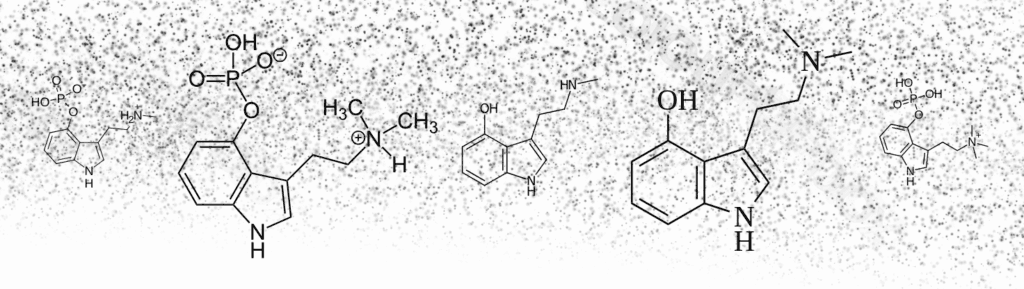
Magic truffles are a natural product consisting of a network of mycelium. Several bioactive compounds occur within this organism.
Psilocybin and psilocin are a well-known part of this chemical composition. In addition, the fungus contains other substances that together determine the organism's profile.
Within research on natural psychedelics, the term entourage effect appears regularly. This term refers to the interplay of different compounds within an organism. Properties of a plant or fungus often arise from the interaction of several substances present simultaneously.
Biological organisms rarely consist of a single isolated compound. Their properties usually arise from a complex set of chemical components that function together.
Magic truffles are an example of such a natural compound.
Psychedelic fungi in historical traditions
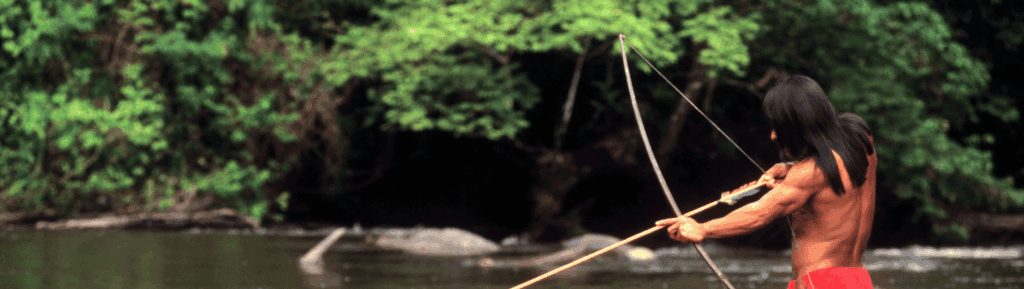
The relationship between humans and psychedelic fungi reaches back further than modern science. In different parts of the world, traces of rituals and traditions appear in which plants and fungi played a role in spiritual and cultural practices.
In Mesoamerican civilisations, historical sources describe the use of psilocybin-containing fungi within religious ceremonies. Archaeological finds, colonial chronicles and anthropological research show that these organisms were part of rituals in which consciousness, symbolism and community came together.
Within these traditions, the fungus gained significance as part of the natural world. The organism stood in relation to landscape, culture and community.
Modern science looks at the same organisms from a different perspective. Neurology, pharmacology and psychology investigate the way substances such as psilocybin act on the brain.
When these different perspectives are juxtaposed, a broader picture emerges. Nature, culture and science intersect in a subject that has been part of human curiosity about consciousness for centuries.
Cultivation and craftsmanship

Magic truffles grow from the mycelium of psilocybin-containing fungi. The cultivation process requires a controlled environment in which temperature, substrate and hygiene are carefully matched.
The mycelium develops slowly and eventually forms compact structures that store energy. These structures are known as truffles.
Within specialised nurseries, this process requires knowledge of microbiology and fungal growth. Stability of the organism and quality of the truffles play an important role within this way of working.
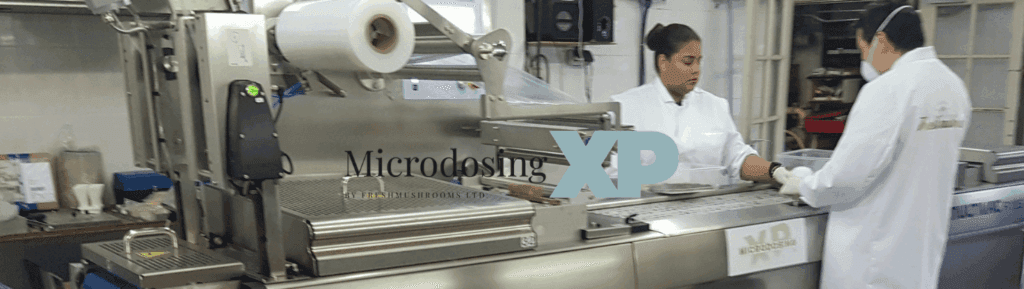
Producers such as Fresh Mushrooms Ltd work from an artisanal approach to this cultivation process. From this experience, products such as Microdosing XP, which incorporates magic truffles, also emerged.
A conversation that continues to evolve

The debate on psychedelics moves at the intersection of multiple disciplines. Neuroscience, psychology, cultural history and law intersect around the same topic.
Historical sources show that different cultures used plants and fungi within rituals and traditions. Modern science examines the same organisms from neurological and pharmacological perspectives.
This combination of tradition, research and social discussion ensures that psychedelics regularly reappear in the public conversation.
Sjors Ligthart's reflection shows that within legal science, space is emerging for renewed reflection. His analysis invites a careful conversation about the relationship between nature, science and law.
Magic truffles are a special example within that conversation. They show how biological reality, scientific research and legal systems meet in a topic that is still evolving.
Read more about Microdosing XP: https://microdosingxp.com/nl/microdosing-xp/
Or take a look at our sales outlets: https://microdosingxp.com/nl/verkooppunten/
