Research on two different approaches to smoking cessation
Quitting smoking is often described as a decision. A moment when someone shuts something down and takes a different direction. In practice, that moment rarely appears in isolation. It is preceded by repetition. By attempts that start and dissolve again. By periods when things seem to work out, followed by moments when old patterns reappear.
Smoking moves with everyday life. It is linked to rhythm. With moments of transition. With pauses, conversations and silences. It often appears without notice, as if it was already decided before it is consciously noticed.
Within many treatment methods, the focus is on the body. Nicotine replacement therapies try to regulate physical dependence. By administering nicotine in a controlled manner, a gradual phase-out occurs. The body does not have to switch abruptly, but can adjust in steps.
At the same time, behavioural therapeutic pathways focus on making patterns visible. When does the need arise. What precedes it. Which situations keep recurring. Within this approach, space is created to not only interrupt habits, but to understand them.
These models have long coexisted.
Yet long-term quitting remains difficult for many people. The process often has several starting points. Sometimes there are months between attempts, sometimes only days. The pattern repeats itself, in ever slightly different forms.
Johns Hopkins Center for Psychedelic and Consciousness Research

Within scientific research, space is therefore emerging for other perspectives. Not only focusing on physical dependency, but also on how behaviour is experienced and given meaning.
A study by the Johns Hopkins Center for Psychedelic and Consciousness Research juxtaposes two of these approaches.
The results were published in JAMA Network Open under the title Psilocybin or Nicotine Patch for Smoking Cessation: A Pilot Randomised Clinical Trial by Matthew W. Johnson and colleagues.
The study is considered the first randomised comparison between a psychedelic intervention and a usual treatment for tobacco addiction.
The study involved 82 adult smokers. All participants had expressed their intention to quit smoking.
The group was randomly divided into two conditions. This created a design in which differences between the approaches could be seen within a shared context.
Group 1: Nicotine patches
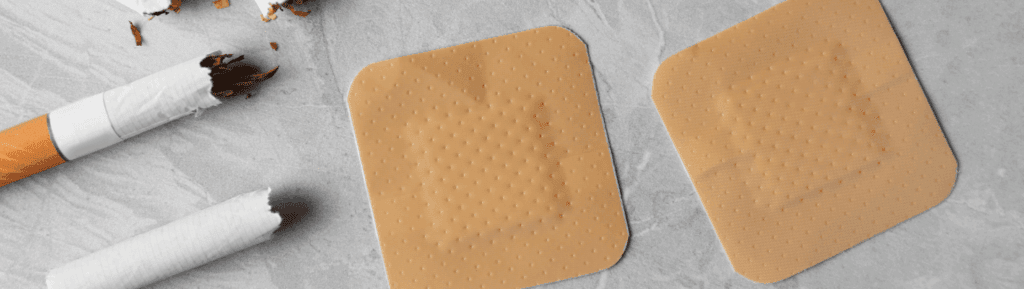
The first group followed a course of nicotine patches. This method has been used for decades and is part of many existing smoking cessation programmes. Nicotine is administered through the skin, allowing the body to get used to lower levels without sudden interruption.
Group 2: Psilocybin

The second group participated in a supervised session with psilocybin.
Psilocybin is a compound found in certain species of fungi. In clinical trials, this substance is usually isolated and administered under controlled conditions.
In natural form, like magic truffles, psilocybin is part of a broader whole. Magic truffles are a natural product in which several compounds occur together. This interplay is sometimes described as the entourage effect. It refers to the way several substances are jointly present within one organism.
An isolated form of psilocybin was used within the study.
Psychotherapy programme

Both groups additionally followed the same psychotherapy programme. For 13 weeks, all participants participated in a course of cognitive behavioural therapy specifically designed for smoking cessation.
This shared basis ensures that differences between the two groups are less likely to be attributed to guidance or context.
Time as an important factor

One of the most striking differences between the two trajectories lies in the role of time.
The nicotine patch group used patches according to existing guidelines for eight to 10 weeks. Here, the process develops gradually. Tapering off takes place in steps spread over several weeks.
In contrast, the psilocybin group received one supervised session.
The dosage was set at 30 milligrams per 70 kilograms of body weight. The session took place around the scheduled stop date within the treatment programme.
Prior to this session, attention was paid to preparation. Participants talked to facilitators about expectations, intentions and the context of the experience. Afterwards, conversations followed in which the experience was discussed and placed.
Within addiction research, such a design is less common. Many interventions are based on repetition, daily intake or long-term support.
Here, a long trajectory stands next to a single moment.
That difference raises questions about how change can happen. Gradually, or suddenly. Scattered over time, or concentrated in one experience.
After the cessation date, participants were followed for six months.
Six months later
To determine whether a person had actually not smoked, the researchers used biochemical verification. This involves measurements that can objectively demonstrate recent nicotine intake.
A clear difference emerges after six months.
- 40.5% was stopped in the psilocybin group.
- 10% in the group with nicotine patches.
After six months, 40.5 per cent of participants in the psilocybin group were found to have remained abstinent.
In the group that used nicotine patches, this percentage was 10 per cent.
Even when looking at shorter periods without smoking, the difference remained visible.
The study presents these outcomes as observations within a specific research design.
The study focuses primarily on outcomes.
Nicotine patches focus on the body and the regulation of dependence.
Psilocybin is associated in neuroscience research with changes in brain networks involved in perception and self-reference.
Concepts such as neuroplasticity and psychological flexibility are mentioned in this context.
The researchers describe the study as a pilot study.
With 82 participants, the scale remains limited.
The research is part of a wider development within psychedelic research.
Magic truffles are a natural product and contain several substances collectively present within the organism. This interplay is sometimes referred to as the entourage effect.
How this complexity relates to isolated substances remains the subject of research.
The study shows how different approaches coexist and how the field continues to evolve.
To wit.
Read more about Microdosing XP:
https://microdosingxp.com/nl/microdosing-xp/

Or take a look at our sales outlets:
https://microdosingxp.com/nl/verkooppunten/